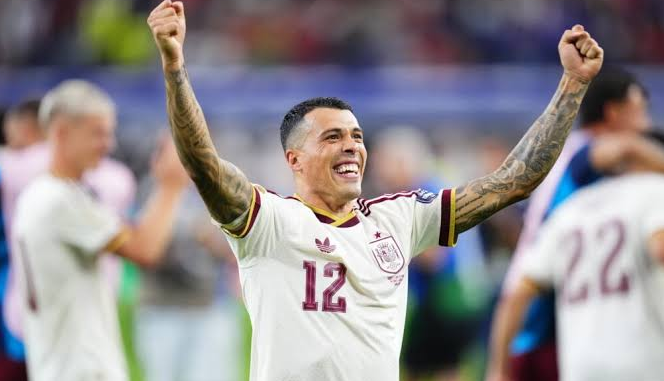
Spain Beat France 2-0 to Reach FIFA World Cup 2026 Final with Commanding Defensive Display
Spain secured a place in the FIFA World Cup 2026 final after a disciplined 2-0 victory over France in the semifinal. The match, played at AT&T Stadium in Arlington, saw Spain combine clinical finishing with outstanding defensive organization to overcome one of the tournament favorites. Goals from Mikel Oyarzabal and Pedro Porro, backed by a composed defensive performance, ensured Spain progressed to the championship match.
Spain Take Control Early
Spain entered the semifinal with confidence after an impressive tournament run. From the opening whistle, Luis de la Fuente’s side controlled possession and dictated the tempo of the match. France attempted to press high but struggled to break through Spain’s organized midfield and defense.
The breakthrough came in the first half when Mikel Oyarzabal converted Spain’s attacking pressure into a deserved lead. Spain continued to move the ball patiently, limiting France’s opportunities to create meaningful chances before halftime.
Defensive Organization Makes the Difference
Spain’s defensive unit delivered one of its strongest performances of the tournament. Center-backs Pau Cubarsí and Aymeric Laporte maintained excellent positioning throughout the match, cutting out dangerous attacks and keeping France’s forwards under control.
Cubarsí produced several crucial clearances and won important defensive duels, while Laporte demonstrated his experience with accurate positioning, interceptions, and calm distribution from the back. Their partnership allowed Spain to remain compact whenever France attempted to increase the attacking intensity.
The clean sheet reflected Spain’s discipline rather than relying solely on individual brilliance.
France Unable to Break Through
Didier Deschamps’ side searched for an equalizer after falling behind but found few clear openings. Spain closed passing lanes effectively and prevented France from creating sustained pressure inside the penalty area.
Despite enjoying spells of possession, France struggled to convert control into quality chances. Spain’s midfield consistently tracked runners and supported the back line, making it difficult for France to find space in dangerous areas.
The defensive structure frustrated the French attack throughout both halves.
Second Goal Secures the Victory
Spain doubled its advantage in the second half through Pedro Porro, effectively ending France’s hopes of a comeback. The goal rewarded Spain’s patience and tactical discipline as they continued to execute their game plan with confidence.
Rather than retreating completely, Spain maintained control of possession and managed the closing stages professionally. Every player contributed defensively, ensuring France never built sustained momentum.
Key Defensive Performers
Pau Cubarsí impressed with timely tackles, strong aerial challenges, and intelligent positioning. His maturity under pressure highlighted why he has become one of Spain’s most promising defenders.
Aymeric Laporte complemented his younger partner with leadership, composure, and accurate passing from deep areas. His ability to organize the defensive line proved vital during France’s periods of possession.
Together, the pairing formed the foundation of Spain’s victory.
Tactical Success for Spain
Luis de la Fuente’s tactical approach balanced possession with defensive discipline. Spain pressed selectively, maintained compact defensive lines, and transitioned quickly whenever opportunities appeared.
France found it difficult to exploit space between the lines, while Spain consistently controlled the rhythm of the contest. The combination of intelligent positioning and efficient ball circulation allowed Spain to dictate the semifinal from start to finish.
Looking Ahead to the Final
With the 2-0 victory, Spain advances to the FIFA World Cup 2026 final carrying strong momentum. Their blend of youthful talent and experienced leadership has made them one of the tournament’s standout teams.
If Spain can reproduce the same defensive organization and attacking efficiency in the final, they will have a strong opportunity to compete for another world title. The semifinal demonstrated that championships are often built on defensive stability as much as attacking quality.
