India Finishes Fourth at Glasgow 2026 Commonwealth Games with 39-Medal Campaign
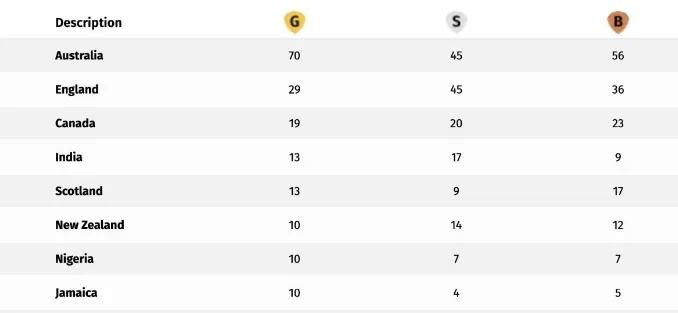
India’s Glasgow 2026 Commonwealth Games campaign ended with an impressive collection of 39 medals, placing the nation fourth in the final medal standings behind Australia, England, and Canada. The Indian contingent returned home with 13 gold, 17 silver, and nine bronze medals, highlighting both established excellence and the emergence of a new generation of athletes. While boxing delivered the strongest contribution with 10 medals, emotional stories from athletes such as Asmita and inspiring performances across multiple disciplines turned the Games into more than just a medal race. As attention now shifts toward the Olympic Games and the Asian Games, India’s performances in Glasgow have strengthened confidence that the country’s sporting progress continues to move in the right direction.
Glasgow 2026 Commonwealth Games Delivers Another Strong Finish for India
Securing fourth place at a major multi-sport event reflects more than medal numbers alone.
It demonstrates consistency across different sports while proving that Indian athletes can remain competitive against some of the strongest Commonwealth nations.
Australia once again topped the medal standings through its depth across swimming, athletics, and cycling. England followed with another balanced campaign, while Canada completed the top three with strong performances throughout the competition.
India, however, maintained its place among the leading sporting nations by producing medal-winning performances across several events.
Winning 39 medals in a highly competitive international competition reflects years of investment in athlete development, coaching systems, and improved sporting infrastructure.
More importantly, several medal winners are still early in their careers, offering encouraging signs for future global events.
Indian Boxing Dominated the Glasgow 2026 Commonwealth Games
If one sport defined India’s campaign, it was boxing.
Indian boxers finished with an outstanding haul of 10 medals, including seven gold medals, making boxing the country’s most successful discipline at the Games.
The performances highlighted India’s growing strength in amateur boxing, a sport that has steadily produced international champions over the past decade.
Rather than depending on a few experienced athletes, India displayed depth across multiple weight categories.
Several finals featured confident tactical performances, disciplined defence, and mature decision-making under pressure. Those qualities demonstrated how Indian boxing has evolved through better coaching, improved international exposure, and stronger domestic competition.
Sakshi Chaudhary described the campaign as a historic achievement for Indian boxing, reflecting the widespread belief that the sport has reached another important milestone.
The success also reinforces boxing’s position as one of India’s strongest medal hopes heading toward future Olympic competition.
Asmita’s Emotional Journey Inspired Fans Beyond the Medal Table
Every major sporting event creates stories that extend beyond statistics.
One of the most memorable moments from India’s campaign came through Asmita, who competed in the women’s 48kg boxing category.
Following her medal-winning performance, she emotionally reflected on her father’s dreams and the sacrifices made throughout her sporting journey.
Her words resonated with fans because they represented the reality experienced by many athletes across India.
Behind every international medal stands years of family support, financial challenges, demanding training schedules, and countless personal sacrifices.
Asmita also made her ambitions clear.
Instead of treating Commonwealth success as the final destination, she spoke openly about pursuing an Olympic medal.
That mindset reflects the changing expectations within Indian sport, where Commonwealth success increasingly serves as preparation for even bigger international achievements.
Balanced Medal Tally Shows India’s Growing Sporting Depth
Although boxing attracted most headlines, India’s medal tally came from multiple sporting disciplines.
The final collection of 13 gold, 17 silver, and nine bronze medals demonstrated that Indian athletes continue improving across different competitions rather than relying on a single sport.
This balance is particularly important because sustained international success requires consistent performances from a wide range of athletes.
Several sports contributed valuable medals while also providing important experience for younger competitors making their first major international appearances.
Such exposure often becomes the foundation for future Olympic campaigns.
Even athletes who narrowly missed the podium gained valuable lessons by competing against world-class opposition.
Those experiences frequently shape future champions.
Fourth Place Reflects Consistency Rather Than Individual Brilliance Alone
Finishing fourth behind Australia, England, and Canada remains a significant achievement considering the strength of those sporting nations.
Australia continues benefiting from decades of investment in elite sports programmes, while England possesses one of the strongest high-performance systems within the Commonwealth.
Canada also maintains consistent excellence across numerous Olympic disciplines.
India’s ability to remain immediately behind those countries highlights the country’s expanding sporting ecosystem.
Improved coaching, sports science support, nutrition programmes, and international competition opportunities have gradually strengthened Indian athletes across multiple disciplines.
Rather than depending on isolated individual stars, India now increasingly produces competitive teams capable of challenging consistently at major international events.
That transition represents one of the most encouraging developments in Indian sport over recent years.
Warm Homecoming Reflects Growing Public Support for Athletes
When India’s athletes returned home, they received enthusiastic welcomes at airports from supporters, families, and officials.
Those celebrations highlighted how public appreciation for Olympic and Commonwealth sports continues to grow across the country.
In previous decades, many athletes returned quietly despite winning international medals.
Today, successful competitors receive recognition that reflects their achievements on the global stage.
That increased visibility benefits younger athletes as well.
Children watching these celebrations often find new sporting role models beyond cricket, encouraging participation across boxing, athletics, wrestling, badminton, and other Olympic disciplines.
Greater public recognition also strengthens sponsorship opportunities, helping athletes prepare more effectively for future international competitions.
Focus Now Shifts Toward the Olympics and Asian Games
The Glasgow campaign may have concluded, but preparations for India’s next major international challenges have already begun.
Several medal winners will now target qualification events for the Olympic Games, while others continue preparing for the upcoming Asian Games.
Coaches are expected to analyse Glasgow performances carefully, identifying technical improvements that can strengthen India’s chances against even stronger global competition.
Success at the Commonwealth Games provides valuable confidence.
However, Olympic competition often features deeper fields and narrower margins between victory and defeat.
Therefore, athletes must continue improving rather than relying on previous achievements.
For emerging stars such as Asmita, Glasgow represents an important milestone rather than the peak of their careers.
The experience gained during these Games could become invaluable when competing on the world’s biggest sporting stages.
India Leaves Glasgow With Confidence for the Future
One of the biggest achievements of Glasgow 2026 Commonwealth Games was not simply India’s fourth-place finish but the confidence created by consistent performances across the entire contingent.
The combination of experienced champions and rising young athletes gives Indian sport a stronger foundation for future international competitions. Boxing’s remarkable medal haul, inspiring individual stories, and balanced performances across multiple events demonstrated that India’s sporting progress continues beyond isolated success. As athletes return to training with their focus firmly fixed on the Olympics and Asian Games, the Glasgow 2026 Commonwealth Games campaign will be remembered as another important step in India’s journey toward becoming one of the world’s leading sporting nations.
