Andrey Rublev Estoril Quarterfinal Becomes a Test of Nerves Against Luca Van Assche
The Andrey Rublev Estoril Quarterfinal has turned into one of the most dramatic matches of the ATP Estoril Open. Top seed Andrey Rublev appeared to be in control after taking the opening set, but Luca Van Assche responded with impressive determination to force a deciding set. As the match reached its closing stages, every point carried extra importance on Estoril’s red clay.
Rublev entered the tournament as one of the favorites. However, the Andrey Rublev Estoril Quarterfinal has shown that rankings alone do not guarantee victory. Van Assche has matched the Russian’s intensity, creating a tense battle that has kept fans fully engaged throughout the contest.
Andrey Rublev Estoril Quarterfinal Starts with a Strong Opening Set
Rublev began the match with confidence.
His aggressive groundstrokes immediately placed Van Assche under pressure.
The world No. 14 controlled the baseline and dictated most of the early rallies.
That approach helped him claim the first set 6-3.
His powerful forehand remained his biggest weapon.
Whenever Rublev stepped inside the baseline, he forced errors from his younger opponent.
The opening set suggested the top seed was moving comfortably toward another semifinal appearance.
However, tennis matches often change quickly, especially on clay courts.

Luca Van Assche Responds with Impressive Fight
Van Assche refused to let the match slip away.
Instead of becoming frustrated, he adjusted his tactics.
The French player extended rallies and forced Rublev to hit extra shots.
That strategy gradually shifted the momentum.
Van Assche also defended several important break points.
Each successful hold increased his confidence.
Late in the second set, he earned a crucial service break that allowed him to win the set 6-3.
The match was suddenly level.
His determination showed why many tennis experts consider him one of the sport’s promising young talents.
Rublev Faces Another Mental Challenge on Court
Throughout his career, Andrey Rublev has spoken openly about the emotional demands of professional tennis.
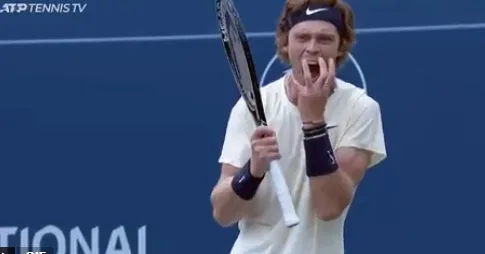
During this match, frustration occasionally became visible.
After several points, Rublev expressed concerns about the court conditions.
He also showed disappointment following a number of unforced errors.
Those reactions reflected the pressure of a closely contested quarterfinal rather than a lack of effort.
Every top player experiences emotional moments during difficult matches.
The challenge is finding a way to quickly regain focus.
That ability often separates victories from defeats at the highest level.
Clay Court Conditions Test Both Players
Clay courts reward patience and consistency.
Long rallies are common.
Players must also adjust to slower ball speed and unpredictable bounce.
Both competitors experienced difficult moments while adapting to the conditions.
Rublev attempted to finish points early with powerful winners.
Meanwhile, Van Assche focused on movement, defense, and smart shot selection.
The contrasting styles created entertaining rallies throughout the match.
Neither player found it easy to dominate for long periods.
That balance kept the contest highly competitive.
Van Assche Builds Confidence with Every Game
Momentum plays a major role in tennis.
Van Assche gained confidence after each successful service hold.
He also benefited from strong crowd support during key moments.
The young Frenchman continued attacking when opportunities appeared.
Instead of becoming defensive against a higher-ranked opponent, he trusted his game.
That confidence allowed him to challenge one of the ATP Tour’s most experienced competitors.
As the deciding set progressed, every hold of serve became increasingly valuable.
The Deciding Set Brings Maximum Pressure
The final set developed into a tense contest.
With the score reaching 4-3 and Van Assche serving, both players understood the importance of every point.
Break opportunities became increasingly valuable.
Rublev searched for aggressive returns to regain control.
Van Assche remained composed under pressure.
His ability to save important points kept the match finely balanced.
Neither player appeared willing to surrender the initiative.
The quarterfinal had become as much a mental battle as a physical one.
Crowd Energy Adds to the Atmosphere
The spectators in Estoril played an important role throughout the match.
Support grew louder as the contest became closer.
Every long rally received enthusiastic applause.
Van Assche appeared to feed off that energy.
Rublev, meanwhile, continued focusing on finding solutions despite the growing pressure.
Atmosphere often becomes a decisive factor during close matches.
Players must balance emotion with concentration.
That challenge becomes even greater during deciding sets.
What This Match Reveals About Both Players
Regardless of the final outcome, both competitors have demonstrated valuable qualities.
Rublev showed why he remains one of the ATP Tour’s strongest hitters.
Even during difficult moments, he continued searching for attacking opportunities.
Van Assche displayed maturity beyond his ranking.
His calm approach, defensive skills, and willingness to compete for every point highlighted his growing confidence.
Young players often develop fastest through matches like this.
Competing closely against established stars provides experience that cannot be gained in practice.
Estoril Quarterfinal Highlights the Importance of Mental Strength
Professional tennis demands more than technical skill.
Mental resilience often decides tight matches.
Every missed opportunity tests a player’s confidence.
Every successful comeback builds belief.
Rublev’s experience and Van Assche’s determination created an excellent example of that reality.
The match also reminded fans why clay-court tennis remains one of the sport’s toughest challenges.
Patience, fitness, decision-making, and emotional control all matter equally when matches become this close.
