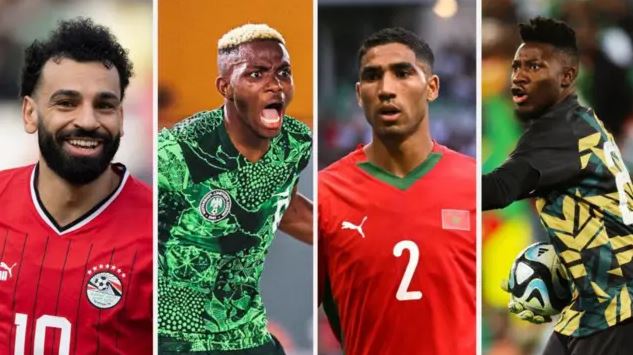
African Teams Make History with Record-Breaking 2026 World Cup Campaign
The 2026 World Cup will be remembered as a landmark tournament for African football. With the competition expanding to 48 teams, Africa secured a record 10 representatives. More importantly, nine of those nations progressed beyond the group stage, setting a new benchmark for the continent.
From established powers like Morocco and Senegal to inspiring newcomers such as DR Congo and Cape Verde, African teams demonstrated their growing quality throughout the tournament.
Morocco Continue to Lead Africa’s Charge
Morocco once again proved they belong among the world’s elite.
The Atlas Lions finished second in a challenging group that included Brazil, Scotland and Haiti. They remained unbeaten against Brazil before recording victories over Scotland and Haiti.
Ismael Saibiri emerged as one of the tournament’s brightest stars. The attacking midfielder scored three goals before suffering an injury. Achraf Hakimi continued to dominate both ends of the pitch, while goalkeeper Yassine Bounou once again delivered in a penalty shootout.
Morocco advanced to the quarter-finals after eliminating the Netherlands and now prepare for another major challenge against France.
Egypt Impress on Their Return
Egypt returned to the World Cup after missing the previous edition.
The Pharaohs qualified from a balanced group featuring Belgium, Iran and New Zealand. Mohamed Salah provided valuable leadership during his final World Cup appearance.
Emam Ashour produced several outstanding performances throughout the tournament. Egypt also displayed excellent resilience by defeating Australia in a penalty shootout before eventually falling to Argentina in the Round of 16.
Their campaign highlighted both experience and emerging talent.
Cape Verde and DR Congo Capture Global Attention
Cape Verde became one of the biggest surprise packages of the tournament.
The Blue Sharks earned three draws against Spain, Uruguay and Saudi Arabia to reach the knockout stage. Goalkeeper Vozinha starred with several outstanding performances, including seven saves against Spain.
DR Congo also enjoyed a memorable return to football’s biggest stage.
Competing in their first World Cup since 1974, they reached the knockout rounds after impressive displays against Portugal, Colombia and Uzbekistan. Although England eventually ended their journey, DR Congo earned admiration for their fearless counterattacking football.
South Africa and Ivory Coast Build for the Future
South Africa returned to the World Cup after qualifying through the African qualifiers for the first time.
Their defensive organization helped them finish third in the group before suffering a narrow defeat against Canada in the Round of 32.
Young defender Mbekezeli Mbokazi emerged as one of the tournament’s brightest defensive prospects.
Ivory Coast also impressed after ending a 12-year absence from the World Cup.
The Elephants advanced from a difficult group before losing to Norway in the knockout stage. Young winger Yan Diomande consistently troubled defenders and strengthened his reputation as one of Africa’s rising stars.
Senegal Show Promise Despite Painful Exit
Senegal entered the tournament with high expectations.
They recovered from two early defeats by defeating Iraq 5-0, recording the biggest World Cup victory ever achieved by an African nation.
Their Round of 32 meeting with Belgium ended in heartbreak. Senegal surrendered a two-goal advantage before losing 3-2 after extra time.
Ismaila Sarr remained their standout performer throughout the competition with his pace and creativity.
Algeria and Ghana Produce Competitive Performances
Algeria displayed resilience after recovering from an opening defeat to Argentina.
Important results against Jordan and Austria secured qualification for the knockout rounds. Switzerland eventually eliminated the Desert Foxes, but Riyad Mahrez once again showed his experience and leadership.
Ghana also reached the Round of 32 following solid performances against England, Croatia and Panama.
Goalkeeper Benjamin Asare impressed after replacing the injured Lawrence Ati Zigi early in the tournament. Ghana’s disciplined defending remained a positive, although they struggled to convert chances in attack.
Tunisia Endure a Difficult Tournament
Tunisia experienced the toughest campaign among the African representatives.
The Eagles failed to earn a single point and conceded 12 goals during the group stage. Defensive errors and inconsistency proved costly throughout the competition.
Midfielder Hannibal Mejbri remained one of the few bright spots during an otherwise disappointing tournament.
Tunisia will now focus on rebuilding ahead of future international competitions.
African Football Reaches a New Level
The 2026 World Cup highlighted the remarkable progress of African football.
Nine teams advanced beyond the group stage for the first time in tournament history. Several nations challenged traditional football powers with disciplined defending, energetic pressing and exciting attacking play.
Morocco remain Africa’s strongest hope for further success, while Egypt, Senegal, Cape Verde and DR Congo demonstrated that the continent’s depth continues to grow.
The tournament also introduced several emerging stars capable of becoming future global icons.
African football leaves the 2026 World Cup with renewed confidence, stronger international respect and clear evidence that the gap between Africa and the world’s elite continues to shrink.
African Teams at the 2026 World Cup
| Team | Best Result |
|---|---|
| Morocco | Quarter-finals |
| Egypt | Round of 16 |
| South Africa | Round of 32 |
| Ivory Coast | Round of 32 |
| Senegal | Round of 32 |
| Algeria | Round of 32 |
| Cape Verde | Round of 32 |
| DR Congo | Round of 32 |
| Ghana | Round of 32 |
| Tunisia | Group Stage |