India’s First Offshore Airport Planned Near Mumbai: Everything You Need to Know About the Vadhavan Airport Project
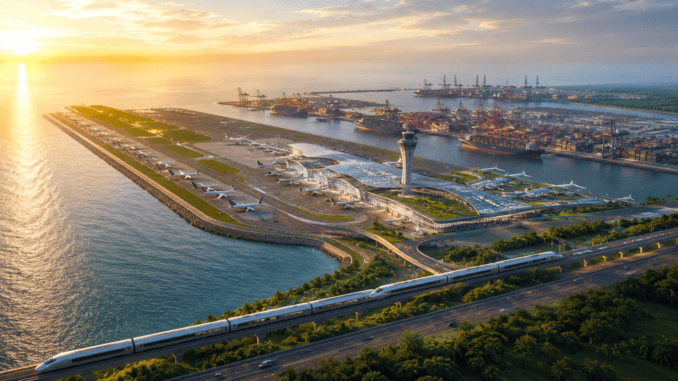
India is preparing for a major leap in aviation infrastructure with plans for its first-ever offshore airport near Mumbai. The proposed airport, expected to be developed in the Palghar district of Maharashtra, is part of a larger vision to transform the region into a world-class transportation and logistics hub.
The ambitious project is being explored alongside the massive Vadhavan Port development, one of India’s largest planned greenfield ports. Together, these projects aim to improve passenger movement, cargo transportation, and regional economic growth while reducing congestion at Mumbai’s existing airports.
Although the project is still in the planning stage, it has already generated significant interest across the aviation, infrastructure, and business sectors.
A Landmark Aviation Project for India
The proposed Vadhavan Airport is expected to become India’s first offshore airport, making it a unique addition to the country’s aviation network.
Maharashtra Chief Minister Devendra Fadnavis recently reviewed the proposed project site in Palghar district and instructed officials to prepare a Detailed Project Report (DPR). The review included discussions on transport connectivity, environmental clearances, power infrastructure, land acquisition, water supply, and rehabilitation measures.
If approved, the airport will play a vital role in supporting the rapidly growing passenger demand in the Mumbai Metropolitan Region.
Why Does Mumbai Need Another Airport?
Mumbai is India’s financial capital and one of the country’s busiest aviation hubs.
Currently, the city relies primarily on:
- Chhatrapati Shivaji Maharaj International Airport (CSMIA)
- Navi Mumbai International Airport (currently under development)
Despite the upcoming Navi Mumbai airport, long-term passenger growth projections indicate that additional airport capacity will be required over the coming decades.
The proposed offshore airport aims to:
- Reduce passenger congestion
- Improve domestic and international connectivity
- Support future aviation demand
- Strengthen western India’s transportation network
Strategic Location in Palghar District
The proposed airport site is located approximately 125 kilometers north of Mumbai’s existing international airport.
Its location offers significant connectivity advantages through several major transportation corridors, including:
- Mumbai–Ahmedabad High-Speed Rail (Bullet Train)
- Delhi–Mumbai Expressway
- Mumbai–Vadodara Expressway
- Mumbai–Ahmedabad National Highway
- Dedicated Freight Corridor
- Uttan–Virar Sea Link (proposed)
These transport links are expected to make passenger travel faster while also improving cargo logistics across western India.
Integration with the Mega Vadhavan Port
One of the biggest strengths of the proposed airport is its proximity to the upcoming Vadhavan Port.
The greenfield port is planned across nearly 1,450 hectares with an estimated investment of over ₹76,000 crore.
According to the state government’s vision, the port will feature:
- Deep draft facilities capable of handling next-generation mega container ships
- Modern cargo handling infrastructure
- International shipping connectivity
- Integrated road and rail logistics
The airport would complement the port by enabling faster passenger movement, business travel, and high-value cargo transportation.
Together, both projects could transform Palghar into one of India’s largest logistics and trade hubs.
Economic Benefits
Large infrastructure projects often generate employment and encourage industrial growth.
If implemented successfully, the airport and port could contribute to:
- Increased tourism
- Faster business travel
- Improved exports and imports
- Growth of logistics companies
- Better regional infrastructure
- New investment opportunities
- Employment generation across multiple sectors
The combined development could significantly strengthen Maharashtra’s economy over the coming decades.
Challenges Ahead
Despite the project’s potential, several important challenges remain.
Environmental Approvals
Since the airport is proposed near coastal areas, obtaining environmental and coastal regulation clearances will be one of the biggest hurdles.
Authorities will need to carefully study marine ecosystems, mangroves, biodiversity, and long-term environmental impacts before granting approvals.
Financial Viability
Experts also point out that building and operating a new international airport requires substantial investment.
Its long-term success will depend on:
- Passenger demand
- Airline participation
- Cargo traffic
- Commercial development
- Economic sustainability
Several smaller airports across India have previously struggled to attract sufficient passenger traffic, making careful planning essential.
Land Acquisition and Rehabilitation
Infrastructure projects of this scale also require coordinated land acquisition and fair rehabilitation measures for affected communities.
Ensuring transparent compensation and sustainable development will be important for the project’s successful implementation.
Current Status of the Project
At present, the offshore airport remains in the planning and feasibility stage.
The state government has directed officials to prepare a Detailed Project Report (DPR) after preliminary studies indicated that the location is technically suitable.
The DPR will evaluate:
- Engineering feasibility
- Construction costs
- Passenger demand forecasts
- Environmental impact
- Connectivity planning
- Financial sustainability
Only after these studies and regulatory approvals will construction timelines become clearer.
What This Means for Indian Aviation
India is among the world’s fastest-growing aviation markets.
As passenger numbers continue to increase, developing additional airports will be essential to support economic growth and improve connectivity.
If completed, the Vadhavan Airport could become a major aviation gateway for western India while supporting future international travel, cargo operations, and regional development.
Alongside major projects like Navi Mumbai International Airport and the Vadhavan Port, the proposed offshore airport reflects India’s long-term vision of building world-class transport infrastructure.
Final Thoughts
The proposed Vadhavan Offshore Airport represents an ambitious vision for the future of Indian aviation. While the project still requires detailed planning, regulatory approvals, and environmental clearances, its strategic location and integration with major transport networks could make it a transformative development for Maharashtra.
If executed successfully, it has the potential to reduce pressure on Mumbai’s airports, improve logistics, boost tourism, and strengthen India’s position as a global transportation hub. Until construction officially begins, the focus will remain on detailed studies and ensuring the project is economically and environmentally sustainable.